Author Archives: Helen Rogers

Honey time in Highgate!

Last weekend we were so pleased to be able to take the first honey of the year from our hives. We’d been waiting for the honey comb to be capped, which means that it has a low enough water content to prevent fermentation.

The sweet floral smell that filled our kitchen was divine… Once the honey is extracted, we let it filter through a coarse sieve and then let it stand for a few days. We then jar and label it.

We are very happy to offer some of our first honey of the season for sale in our shop – I hope that you enjoy it as much as we do!

Busy bees

This week the bees have been working really hard. The long days mean they are out flying early and I’ve seen them still at work at 9:30 at night! The supers are starting to feel very heavy, but they are still working on capping the honey so it isn’t ready to take any yet.

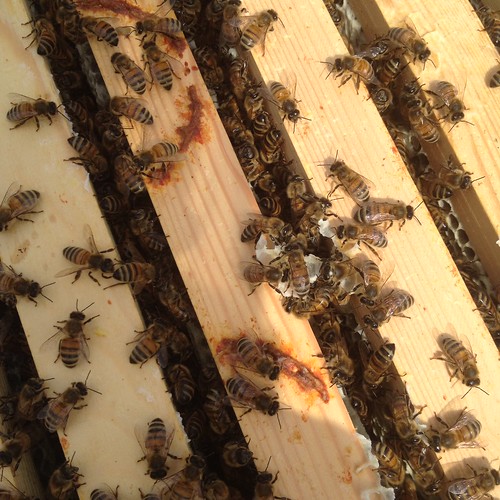
When I took the roof off one of our home hives today I could see hundreds of bees packing nectar into the comb.

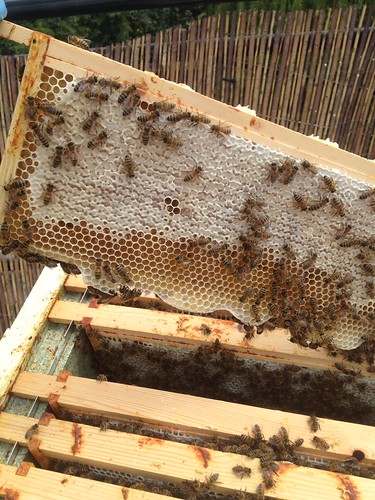
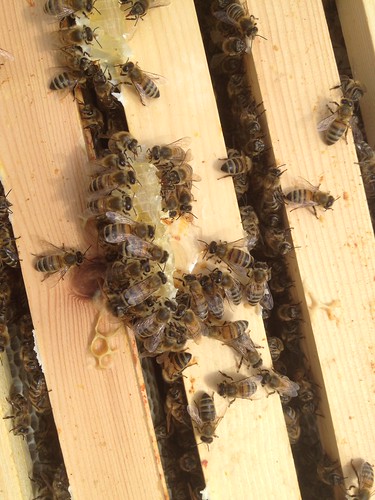
When I pulled out a frame it looked like this…

When honey is “ripe” the bees cap it with white wax, which seals it in and prevents any moisture or contaminates getting into the honey. I was impressed to see how quickly they have been working, it was just a couple of weeks ago that I’d put in this frame – back then it looked like this…

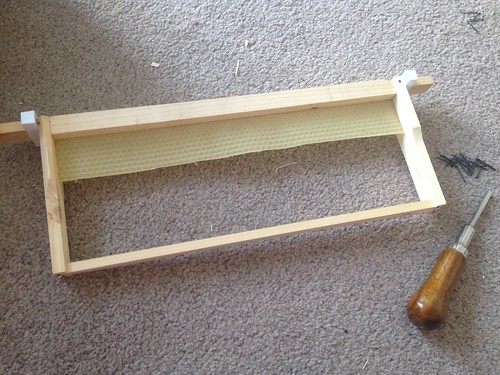
You can see that I have been using just a small strip of wax foundation as a guide for bees. They have built a complete comb, filled it and capped most of it!

All our home hives have several supers on at the moment. When I took the top layer off in one hive a small bit of comb that had been built between the layers of supers was pulled off. The picture below shows the bees springing into action and cleaning up the spilled honey within a few seconds – they don’t waste a drop.

N6 Nectar flow is now!

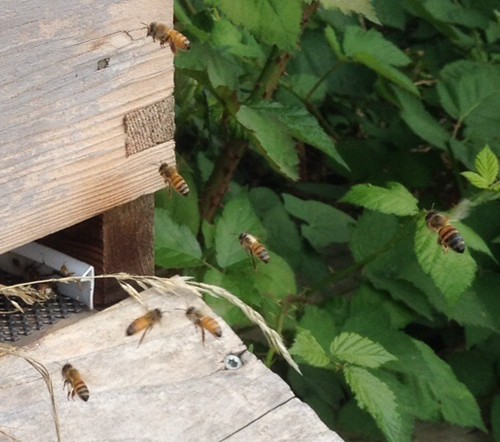
Suddenly the hives are humming – bees are piling in and out throughout the daylight hours and as the sun goes down there is a terrific fanning noise. The bees fan the honey with their wings to reduce the water content – this is their busiest time of year!

The warm weather is perfect for gathering nectar, so it is important for us to keep a close eye on the hives to make sure the bees have enough room to store it and continue to raise brood.

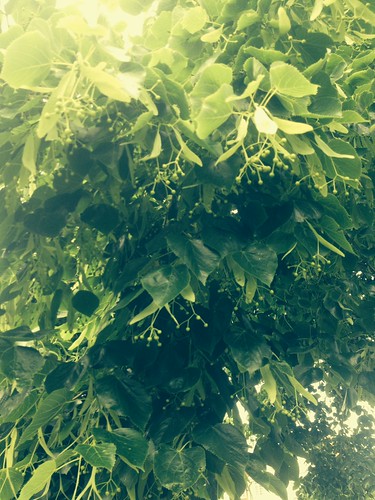
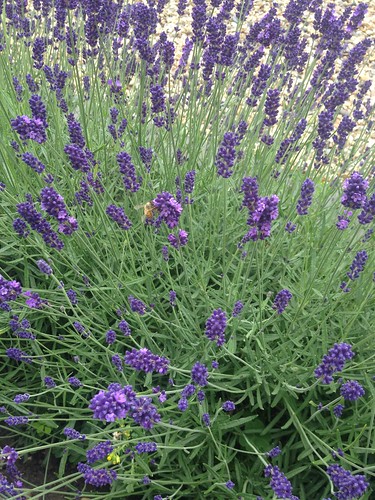
The lime trees locally are just starting to open, and we’ve seen bees very busy on lavender and clover. We haven’t mown our lawn this week so the bees can make the most of it.

Untitled photo

Untitled photo


Strengthening the workforce

At the beginning of May I split some of our colonies in an attempt to stop them from swarming. I had limited success – some of the splits decided to swarm anyway. We collected the swarms… this meant that we ended up with rather a lot of boxes of bees on our roof. Small colonies are generally weak colonies. Strong colonies are able to defend their hive from robbing bees and wasps, are less likely to be wiped out by disease and also collect more nectar to make honey.

This week I decided it was time to recombine some of these colonies. This always causes a bit of chaos as it takes a little while for all the bees to find their new homes, but it is worth the fiddling around in the end.

So, now we have 3 strong colonies. I’ve noticed that the wild blackberries are just starting to flower and that there are buds on the Lime trees, so with luck the bees should be able to take advantage of the flow of nectar.

Untitled photo

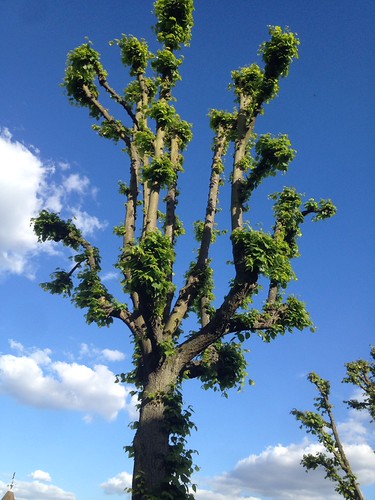
Sadly the lime tree avenue close to our hives was pollarded over the winter, so there won’t be any honey from them this year.

Untitled photo

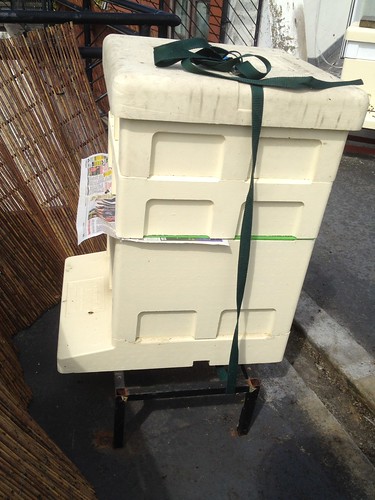
When we combine two colonies we separate them with a sheet of newspaper. It takes them a day or two to nibble through it and the theory is that by then they are used to each others smells and won’t try and evict each other.


Pollinator Week

Apparently this week is pollinator week! We are supposed to be celebrating our little friends, so I thought I’d take a little tour around our garden and see what they have been up to…

Untitled photo

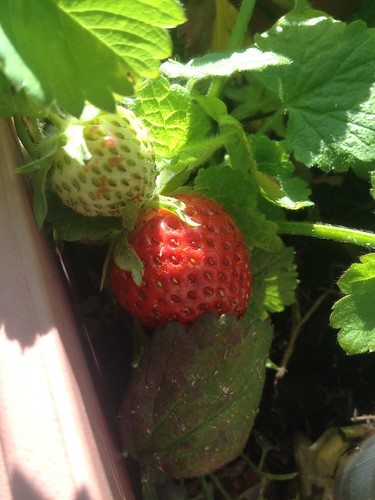
Strawberry season is well under way – we’ve been enjoying some most days recently. Last year we made some wire cages to go around the plants as they were raided by squirrels – they seen to be doing the trick so far…

Untitled photo

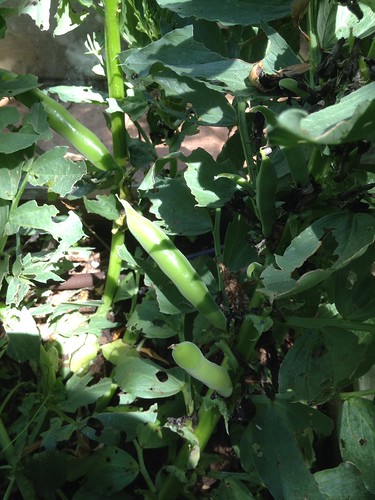
Broad beans

Untitled photo

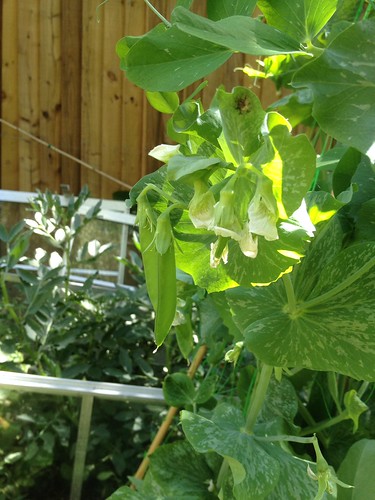
Snap peas

Untitled photo

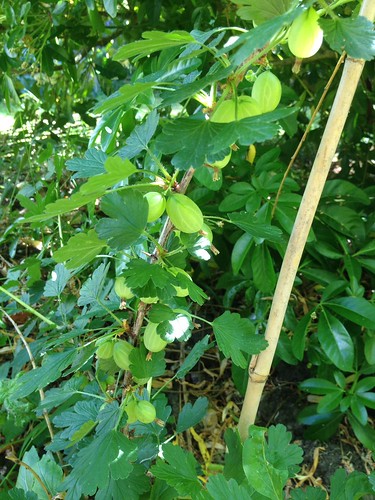
Gooseberries

Untitled photo

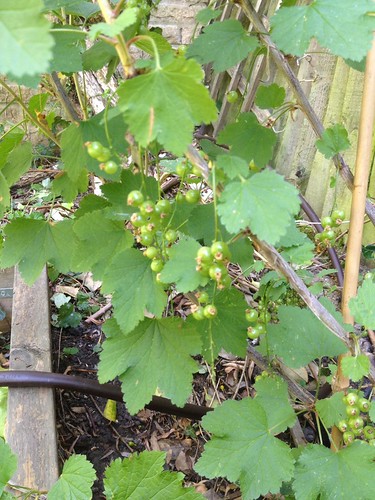
White currents

Untitled photo

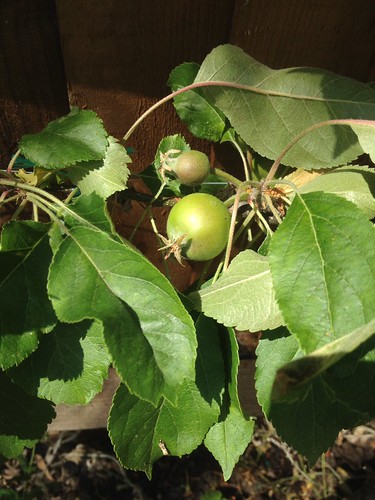
Apples

Untitled photo

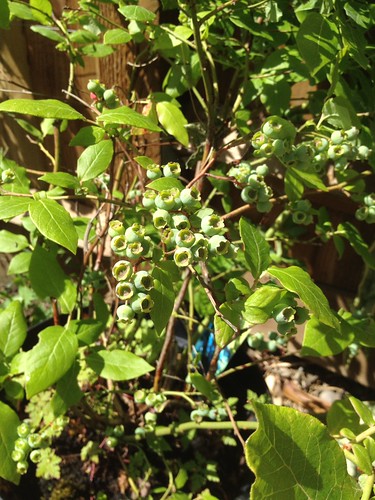
Blueberries

Untitled photo

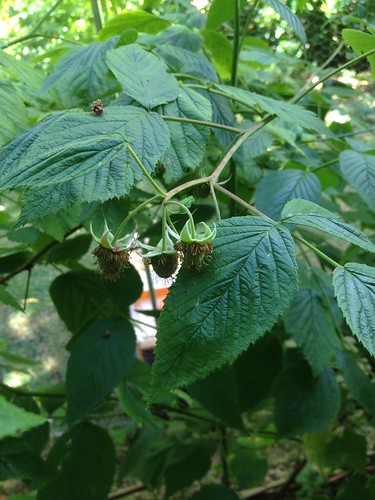
Raspberries

Untitled photo

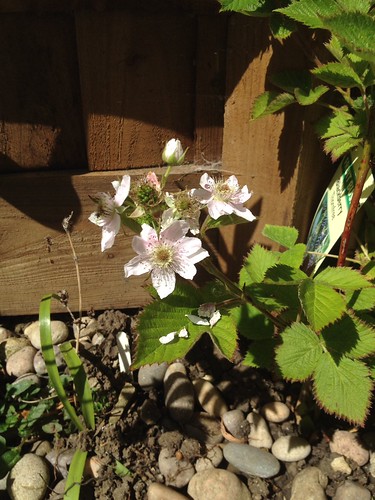
Blackberries

Untitled photo

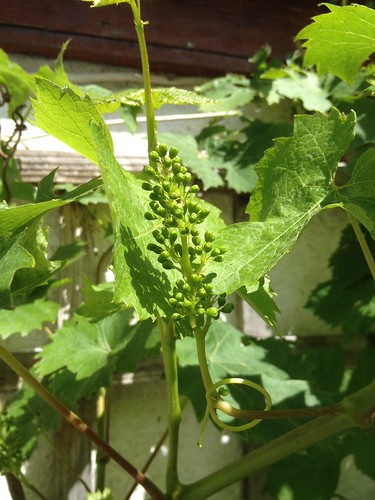
Grapes

Without pollinators none of these delicious fruits and vegetables would have set and our diets would be much the poorer as a result. So, thank you little creatures – we’ll do our best to take care of you in return for your hard work.


Best bee plant?

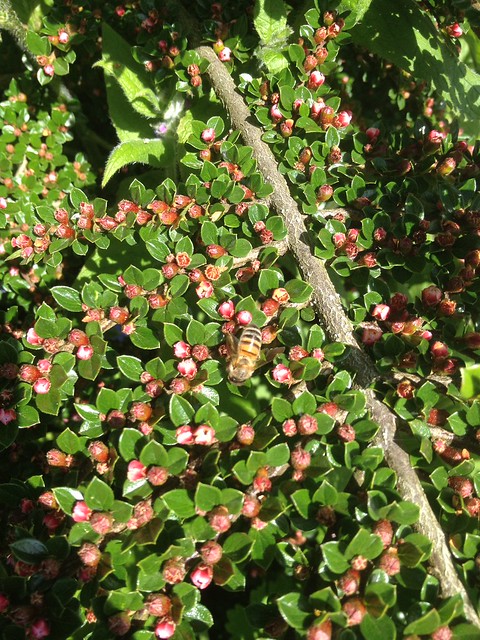
In our front garden we have an established Cotoneaster horizontalis which I think has to be one of the best plants that you can plant for bees. It has been flowering for about 3 weeks and is always covered in bees. Even in the evening when the honey bees have gone home the bumble bees are busy on it. It is literally coverered in flowers – must must have one of the highest flower to plant area ratios in the world! This afternoon I spent a few minutes watching it and I counted 4 sorts of bees in that short time. The added bonus is that it sets tiny red berries which the birds guzzle through the winter.

I don’t know how much nectar or pollen it yields, but the bees adore it and it is a pleasure watching them at work.

Untitled photo

A Queen is born! And a honey update

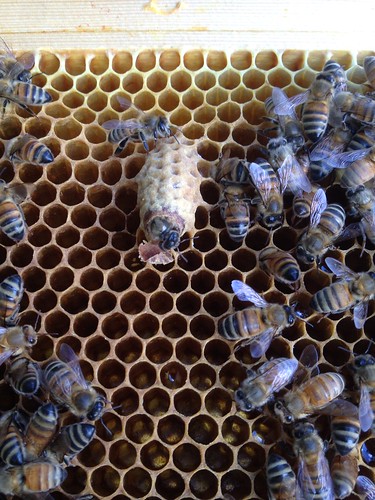
The cold wet weather has meant that I haven’t been able to inspect our hives in Hendon until today. As soon as I opened the hive that I artificially swarmed a couple of weeks ago I could hear a virgin queen “piping”. Some people call it quacking, but whatever you call it, it sounds like high pitched morse code!

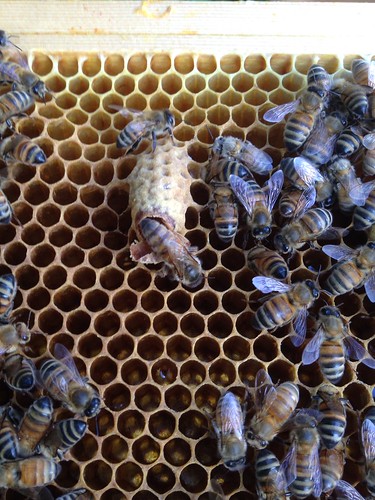
She was there, on the first brood frame I lifted out. The workers had removed a flap of wax at the end of the queen cell and she was just peeping out.

Untitled photo

Within in a few seconds she marched out – isn’t she beautiful?!

Untitled photo

I’m now hoping for a calm, warm day over the next week so she can safely take her mating flight. We will know if she has made it successfully if we see eggs being laid in the comb in a few weeks.

For all you lovely, patent people who have been in touch wanting to know when we’ll have some honey available – here is the news:

Untitled photo

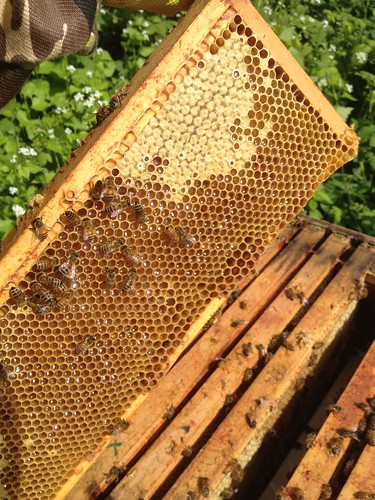
The bees are working very hard bringing in nectar – you can see it glistening in the comb. Once the honey has the right water content so that it won’t ferment,the bees cap it with wax – you can see that they have started to cap this frame already. It is difficult to judge exactly how long it will be before there is enough to extract, because it is so weather dependent, but the day is coming closer!


Swarm season

Swarm season is upon us. Typically people say that colonies swarm between May and July, but our colonies have other ideas. Bees swarm to create a new colony. It is an entirely natural process and actually rather fascinating. Most beekeepers attempt to prevent swarming because once a colony has swarmed you have lost a good deal of your workforce.

We have one very strong hive at home and one at Hendon, a couple of weeks ago I noticed that they each had started making queen cups, which are special cells in the comb to grow a new queen bee in. Last week I saw that the queen had laid eggs in these which means that the colony is preparing to swarm. I decided to artificially swarm both of these hives, which involves splitting the colony into two hives. Thank goodness I had spare hives ready! In one I put all the brood (along with the queen cells, that will turn into new queens) and in the other I put the queen and all the flying bees. This is supposed to convince the bees that they have already swarmed. So far so good…

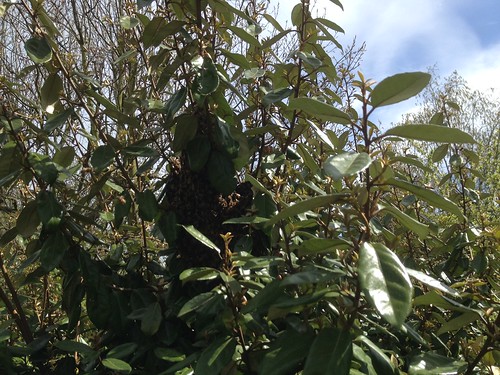
Two days later we were having lunch, A looked out of the window and remarked that there were rather a lot of bees out – my heart sunk – we had a swarm. We raced up to the roof to see bees pouring out of the hive that I’d put the queen and the flying bees into. Luckily they clustered in a tree on the edge of our garden and I was able to retrieve them easily.

Here they are clustered in the tree

Untitled photo

And here they are going into my nuc box (a mini hive)

Untitled photo

Untitled photo


Spring time

Spring is really underway here now! I’m so pleased to see different kinds of bees visiting the flowers that we’ve planted in our garden. I love this combination of primroses and grape hyacinth – I’ve been dreaming of it through the depths of winter.

Untitled photo

Untitled photo

Our broad beans are flowering too!

Untitled photo

On our street these plum and greengage trees are buzzing with bees.

Untitled photo

Untitled photo

In our shady front garden our camellias are finally flowering – they are a whole month behind the ones across the road that enjoy full sunshine. Isn’t that white one perfection?

Untitled photo

Untitled photo