Author Archives: Helen Rogers

7 Authentic Secrets of Valentine’s Folklore for London Bee Lovers

Valentine’s Day in London can sometimes feel like a bit of a rush for the last bouquet of roses at the local florist, but for those of us who keep bees in the city or wander the quiet paths of Hampstead Heath, this season has a much deeper, more “honeyed” history. Long before heart-shaped boxes of chocolates filled our shops, honey was the true language of love. Whether you are battling the February sniffles or looking for a way to help our local pollinators, there is something truly magical about the connection between bees and romance. We believe that understanding the folklore of the hive helps us appreciate the simplicity of nature’s gifts.

1. Cupid’s Golden Tip: The Original Love Potion

One of the most charming pieces of mythology is the tale of Cupid, the mischievous god of desire, who was said to have dipped the tips of his arrows in honey before taking aim. While the sting of his arrow brought the “pain” of love, the honey coating ensured that the result was ultimately sweet. This ancient imagery reminds us that honey has always been associated with attraction and the “sweetness” of a partner’s character.

2. The “Telling of the Bees” Traditions

In old English folklore, bees were considered part of the family, and it was essential to “tell the bees” about all major life events, especially weddings and new romances. If a young Londoner found a sweetheart, they might whisper the news to the hive to ensure the relationship would be as industrious and harmonious as a colony. It was believed that if you didn’t keep the bees “in the loop,” they might become offended and leave the hive. While we don’t expect our Highgate bees to pack their bags if you forget to mention your Valentine, there is a beautiful authenticity in acknowledging our connection to these tiny, vital neighbours who share our urban landscape.

3. Bees as Symbols of Purity and Fidelity

Bees have long been symbols of unwavering devotion. Because they work so selflessly for the good of the hive, ancient folklore often cast them as the ultimate examples of fidelity and hard work—qualities many look for in a long-term Valentine. In some cultures, seeing a bee on Valentine’s Day was considered a sign that a hardworking and faithful partner was on the horizon. While seeing a honeybee in February depends entirely on a lucky break in the London weather, our bees do fly on sunny winter days to stretch their wings. If you spot one near a Christmas Rose in your garden, consider it a very good omen for your heart.

4. The Nectar of the Gods

Throughout history, honey has been referred to as “The Nectar of the Gods,” a substance so pure it was fit for the divine. Folklore suggests that eating honey with your beloved would bind your souls together, much like the bees are bound to their queen. This isn’t just about romantic fluff; it’s about the nutrition and energy that honey provides, which was once seen as a miraculous gift from the earth. Sharing a spoonful of local London honey is a simple, healthy way to connect with the planet and your partner without the need for over-the-top gestures. It’s a bit like a North London hug in a jar.

5. St. Valentine and the Awakening Hives

Interestingly, St. Valentine’s Day falls right as the natural world begins its slow stir toward spring. In beekeeping folklore, this mid-February period is when the queen begins to increase her egg-laying, and the “heart” of the hive starts to beat faster. It’s a time of renewal and the promise of future sweetness. For the conscious Londoner, Valentine’s Day is less about the commercial “work” of the holiday and more about noticing these quiet shifts in nature. By planting early foragers like Crocus or Winter Aconite now, you are essentially sending a Valentine to the bees that will help them survive the final stretch of winter.

6. Honey as a Gift of Healing

Folklore doesn’t just focus on the “butterflies” of new love; it also treasures the healing power of honey for long-term care. It was often said that a gift of honey could “sweeten” a sour mood or heal a broken heart. We know today that honey has incredible nutritional benefits, especially for those of us living in the city who might be feeling a bit overwhelmed or run down. Giving a gift made from the hive—like our handmade honey soaps or beeswax candles—is a way of saying “I care about your well-being”. It’s a thoughtful, authentic alternative to the usual plastic-wrapped gifts that populate the high street.

7. The Bee’s Choice: Finding Your Perfect Match

Just as bees have “favourites” when it comes to flowers—preferring the blues and purples of Lavender or the heady scent of a Mock Orange—folklore suggests we should be just as discerning in love. A bee won’t waste its time on a flower that offers no substance, and neither should we. The best relationships, like the best honey, require the right ingredients and a lot of patience. Whether you’re in a quiet garden in Oxfordshire or a bustling balcony in Hendon, the lesson remains: choose what is real, what is nourishing, and what helps you bloom.


Valentine’s Day is the perfect moment to pause and appreciate the extraordinary world of the honeybee right here in our London postcodes. Whether you’re treating yourself to some Highgate Honey or just spending five minutes watching the birds in the trees, remember that sweetness is often found in the simplest places.

If you’ve found yourself captivated by these tales and want to explore the deep history of our winged friends, I highly recommend reading The Sacred Bee in Ancient Times and Folklore. It is an incredible resource for anyone who wants to understand the profound spiritual and cultural bond we share with the hive.

7 Remarkable Winter Flowers for Our London Bees

It was during a cold, grey morning in early March 2020 that my mum and I had a long chat about our gardens. With a lockdown looming, we knew we’d be spending a lot more time outdoors—she in her expansive Oxfordshire garden and I in my much smaller London space. We decided then and there to pay extra attention to which plants truly attracted our bees. While most bees hunker down in winter, honeybees will fly on any sunny day when the temperature rises, and queen bumblebees start emerging as early as February. In the urban microclimate of North London, these early risers are often desperate for a mid-winter snack.

Providing forage during these lean months is a “life-saver” for our local colonies. Whether you have a sprawling garden in Highgate or a sunny balcony in Finchley, you can help nourish our bees. Here are seven of our favourite winter-flowering plants that will keep your garden buzzing even in the frost.


1. The Reliable Mahonia

If you want a plant that works as hard as a honeybee, look no further than the Mahonia (Mahonia × media ‘Charity’). This hardy evergreen shrub is a total “magnet” for bees from October right through to December. It produces structural, spiky leaves topped with bright yellow, fragrant flower racemes that look like a ray of sunshine on a bleak January afternoon. In the urban gardens of Hendon and Hampstead, it provides a vital source of nectar and protein-rich pollen when almost nothing else is in bloom. It is incredibly tough and can handle the varied London soil, even thriving in partially shaded spots. Just remember to give it a bit of room, as it can grow up to 9 feet tall.

2. Cheerful Winter Aconites

Winter Aconites (Eranthis hyemalis) are like tiny, golden buttercups wearing green ruffs. These tuberous perennials are some of the very first flowers to appear, often appearing in January while the rest of the garden is still fast asleep. They are particularly useful winter forage for honeybees that venture out on mild winter days. We love planting them under deciduous trees where they can spread and create a golden glow. They prefer alkaline soil, but if you have the local North London acidic soil, they can still do well if you add a bit of lime to the area.

3. The Classic Christmas Rose

Don’t let the name fool you; the Christmas Rose (Helleborus niger) often saves its best show for February and March. These hellebores are a welcome sight for early-emerging queen bumblebees who need an immediate energy boost to start their new colonies. When choosing hellebores, always opt for “single” flower varieties. While the “double” varieties are showy, they often make it impossible for bees to reach the nectar and pollen hidden inside. These plants are “tough as old boots” and love a partially shaded spot, making them perfect for those tricky corners of a London courtyard.

4. Scented Winter Honeysuckle

While most people think of summer climbers, Winter Honeysuckle (Lonicera fragrantissima) is a bushy shrub that produces highly fragrant, cream flowers in winter and early spring. The scent is absolutely “heavenly” and is a clear signal to any foraging bee that a feast is nearby. It is a fantastic nectar source, especially during those rare warm spells in late winter. It’s a bit of an “urban secret” that works brilliantly in London gardens, providing both a sensory treat for us and essential forage for our bees.

5. Early Flowering Crocus

Nothing says “spring is coming” like a cluster of Crocus pushing through the frost in March. Bees see colours differently than we do, and they are particularly drawn to the blues and purples of many crocus varieties. These flowers are “pollen powerhouses,” providing the vital minerals and protein needed for the bees’ developing brood. We recommend planting them in sunny spots so the flowers can fully open, allowing the bees easy access to the center. They are perfect for pots on a balcony or tucked into the edge of a flower border.

6. Hardy Winter Heather

Winter-flowering Heather (Erica) is a low-growing shrub that provides a “carpet of colour” throughout the year depending on the variety. It is an exceptionally reliable nectar source, and recent research even suggests that heather nectar may act as a natural “medicine” for bumblebees. Because it flowers for several months, it offers “excellent value” in a small garden where space is at a premium. It’s a wonderful way to add some vibrant pinks or purples to your winter landscape while supporting the local pollinators of Epping Forest and beyond.

7. Essential Evergreen Ivy

Common Ivy (Hedera) is often the unsung hero of the bee world. While it starts flowering in September, its green-yellow flower “baubles” remain an essential autumn and early winter forage source. It is the primary food source for the specialist Ivy bee, which is active until late October. Beyond the nectar, the dense evergreen leaves provide crucial shelter and hibernation spots for many insects. If you have a wall or fence in North London, letting a bit of ivy grow is one of the simplest and most effective things you can do for your local ecosystem.


Conclusion

Helping our bees survive the winter doesn’t require a master’s degree in horticulture—just a little planning and a few well-chosen plants. By adding even one or two of these winter stars to your space, you’re providing a vital “lifeline” for the bees that call London home. It’s a small change that makes a world of difference to the health of our local colonies. For more tips on supporting pollinators, you can visit the Royal Horticultural Society. If you’d like to try some of the delicious honey that our brilliant bees make, then visit our website shop.

6 Breathtaking Secrets to Conquering North London Hayfever This Spring

If you’ve stepped outside in Highgate or Hampstead lately, you might have noticed the Hazels are already showing off their catkins. While I find them a cheering sight—a vital early snack for our bees—I was recently out with a friend who met them with a groan rather than a grin. For her, those catkins are the starting gun for the dreaded hayfever season.

It’s a confusing world out there, isn’t it? One article tells you honey is a miracle cure, the next says it’s a myth. As your local beekeeper, I want to cut through the buzz with some plain English and a bit of bee science. If you’re a busy Londoner tired of the “pollen panic,” here is how our local, raw honey might just become your best friend this spring.

1. Understanding the “Tiny Vaccination” Theory

The idea behind using honey to help with hayfever is a bit like a natural, much tastier version of a vaccination. Honey bees are marvellous little foragers, visiting thousands of flowers and inadvertently bringing tiny, microscopic pollen grains back to the hive. These grains end up in the honey. The theory is that by eating a small amount of this local honey every day, you are introducing those allergens to your system in tiny doses. Over time, your body learns not to see that pollen as an “enemy,” building up a natural resistance before the local trees and grasses truly start to bloom. It’s a gentle way to tell your immune system to “keep calm and carry on.”

2. Why Postcodes Matter More Than You Think

If you live near the Welsh Harp reservoir in Hendon or the leafy lanes of Highgate, you need honey from those specific bees. Why? Because bees generally forage within a four-mile radius of their hive. There is no use eating honey from a clover field in the countryside if it’s the London Lime trees in your local park that make you sneeze. We pride ourselves on never mixing honey from different hives. Every jar we sell is labelled with the specific postcode where the bees lived and worked, ensuring the pollen inside matches the air you’re actually breathing. It’s hyper-local support for a hyper-local problem.

3. The Problem with “Supermarket Clear” Honey

Have you ever noticed that most shop-bought honey is perfectly clear and runny? While it looks good, that clarity often comes at a high price. To keep honey from setting on a shelf for months, large producers often use high-pressure filtering and intense heat. This process is quite brutal; it strips out those precious, “cloudy” pollen grains that you actually need for the hayfever theory to work. It’s essentially “dead” honey. At Highgate Honey, we keep things simple: no high heat and no fine filtering. If your honey is a little cloudy or starts to set, celebrate it! That means the pollen is still in there doing its job.

4. Timing is Your Secret Weapon

One of the biggest mistakes people make is waiting until they are already sneezing to reach for the honey pot. For your body to build up any kind of immunity, you really need to start your daily “dose” several months before your specific trigger flowers bloom. Since different people are sensitive to different things—from early birch and hazel to mid-summer Lime trees—the best time to start is usually right now, in the depths of winter or very early spring. Think of it as a delicious daily ritual to prep your immune system for the season ahead. A spoonful a day keeps the tissues away!

5. Biodiversity in a Jar

Urban bees in North London actually have a much more varied diet than many country bees. While a farm bee might only see one crop (like oilseed rape) for miles, a Highgate bee enjoys a smorgasbord of garden flowers, parkland trees, and wild flowers on Hampstead Heath. This means the honey they produce contains an incredibly rich “bio-map” of local pollen. By choosing raw, local honey, you aren’t just getting one type of pollen; you’re getting a comprehensive local blend that covers a wide range of potential triggers, all wrapped up in a sweet, nutritious package.

6. Supporting the London Ecosystem

When you buy honey from local hives in Finchley or Hampstead, you aren’t just helping your nose—you’re helping the planet. Supporting local beekeepers ensures we can continue to look after these vital pollinators who keep our London gardens and parks lush and green. It’s a beautiful cycle: the bees gather the pollen that bothers you, turn it into something delicious, and your purchase helps us keep the bees healthy enough to do it all again next year. It’s a “win-win” that doesn’t add any extra “work” to your busy schedule. You’re eating well and doing good simultaneously.

Finding Your Perfect Match

Whether the theory works for every individual or not, there is no denying that raw, local honey is a far superior treat to the processed stuff. It’s a bit of North London sunshine in a jar, and frankly, who minds taking their “medicine” when it tastes this good? If you’re curious about the different types of British trees that might be triggering your symptoms, the Woodland Trust has a fantastic guide to identifying local species.

What’s the Difference Between Highgate Honey and Highgate Fayre Honey?

About once a week, I receive an email from someone complaining about the quality of Highgate Fayre honey. I always have to gently explain that Highgate Fayre has nothing to do with us – it’s a completely different product from Highgate Honey.

So what is Highgate Fayre?

Highgate Fayre is the brand name the supermarket Lidl uses for a range of condiments, including several types of honey. Their honey is sold in glass jars or plastic squeezy bottles, and according to the label, it is a blend of honeys from various countries.

Highgate Honey, on the other hand, is produced locally here in London. We harvest it ourselves from our own hives, and never blend honeys from different hives or locations. Each jar is unique and reflects the season, location, and forage of the bees.

Key Differences

Origin: Lidl’s honey is blended from international sources. Ours is produced exclusively in London.

Batch size: Lidl produces at industrial scale. We jar in small batches of around 50 jars.

Packaging: Lidl uses standard round jars or plastic bottles. We use hexagonal glass jars with kraft paper labels.

Blending: Lidl blends for consistency. We keep each hive’s honey separate to preserve its unique character.

Availability: Lidl is stocked nationwide. We only sell direct, not through supermarkets.

Flavour: Lidl’s honey is uniform. Ours changes throughout the season and varies from hive to hive.

Traceability: Lidl does not trace to source. We can trace each jar back to the hive and location.

Why the difference in price?

At first glance, the supermarket honey seems like a bargain, currently at £2.29 for 340g – but the lower price comes with hidden costs:

  • Lidl’s honey is a mass-produced blend from unnamed international sources. It’s processed for consistency, not character.
  • Highgate Honey is:
    • Unblended and unheated
    • Harvested from London hives, just a few miles from our home
    • Extracted and Jarred in small batches by hand
    • Unique in taste, colour, and aroma
    • Ethically produced with bee welfare as a priority

You’re not just buying honey – you’re supporting local biodiversity, sustainable beekeeping, and a transparent food system.

In fact, more than 90% of jars of imported honey stocked in large shops tested in the UK in 2024 were found to be adulterated – often with cheap syrups or undeclared ingredients.

Read the Guardian article about it here


In summary

So next time you’re choosing honey, ask yourself: do you want a faceless blend from thousands of miles away, or a jar that tells the story of a single hive, a single place, and a single season?
At Highgate Honey, every jar is a celebration of London’s natural landscape — crafted with care, never blended, and utterly authentic. It might cost more, but it’s a completely different product, worth every spoonful. You can pick up a jar here

Honeybee Swarms: What to Do (and Why They Happen)

Between May and June, honeybee swarms are a common sight in the UK – though with changing weather patterns, swarms are being spotted earlier and later than ever. You may have heard the old saying:

A swarm in May is worth a load of hay.
A swarm in June is worth a silver spoon.
A swarm in July isn’t worth a fly.

This traditional rhyme tells us how valuable a swarm can be to a beekeeper, depending on when it happens. But in recent years, we’ve heard reports of swarms as early as March – and who knows how long the swarming season will now continue?

Why Do Honeybees Swarm?

A swarm is how a honeybee colony reproduces. It’s a sign of a thriving hive. When a colony runs out of space – often in a managed hive – the bees decide it’s time to split.

Here’s what happens:

  • The old queen leaves the hive with about half the bees.
  • They set off to find a new home.
  • Back in the original hive, the remaining bees raise a new queen from existing larvae.

It’s nature’s way of multiplying honeybee populations.

Can Swarming Be Prevented?

Yes – with careful beekeeping management. At Highgate Honey, we keep our bees in London, where a swarm of bees in the city can cause chaos. We work hard to manage our colonies and reduce the risk of swarming. But despite best efforts, occasional swarms are inevitable – it’s part of being a beekeeper.

What Does a Honeybee Swarm Look Like?

If you’ve never seen a swarm before, it can be quite an exhilarating spectacle. Thousands of bees pour out of the hive at once. The air fills with buzzing, and it might sound like a roar. But don’t panic – the bees aren’t interested in you.

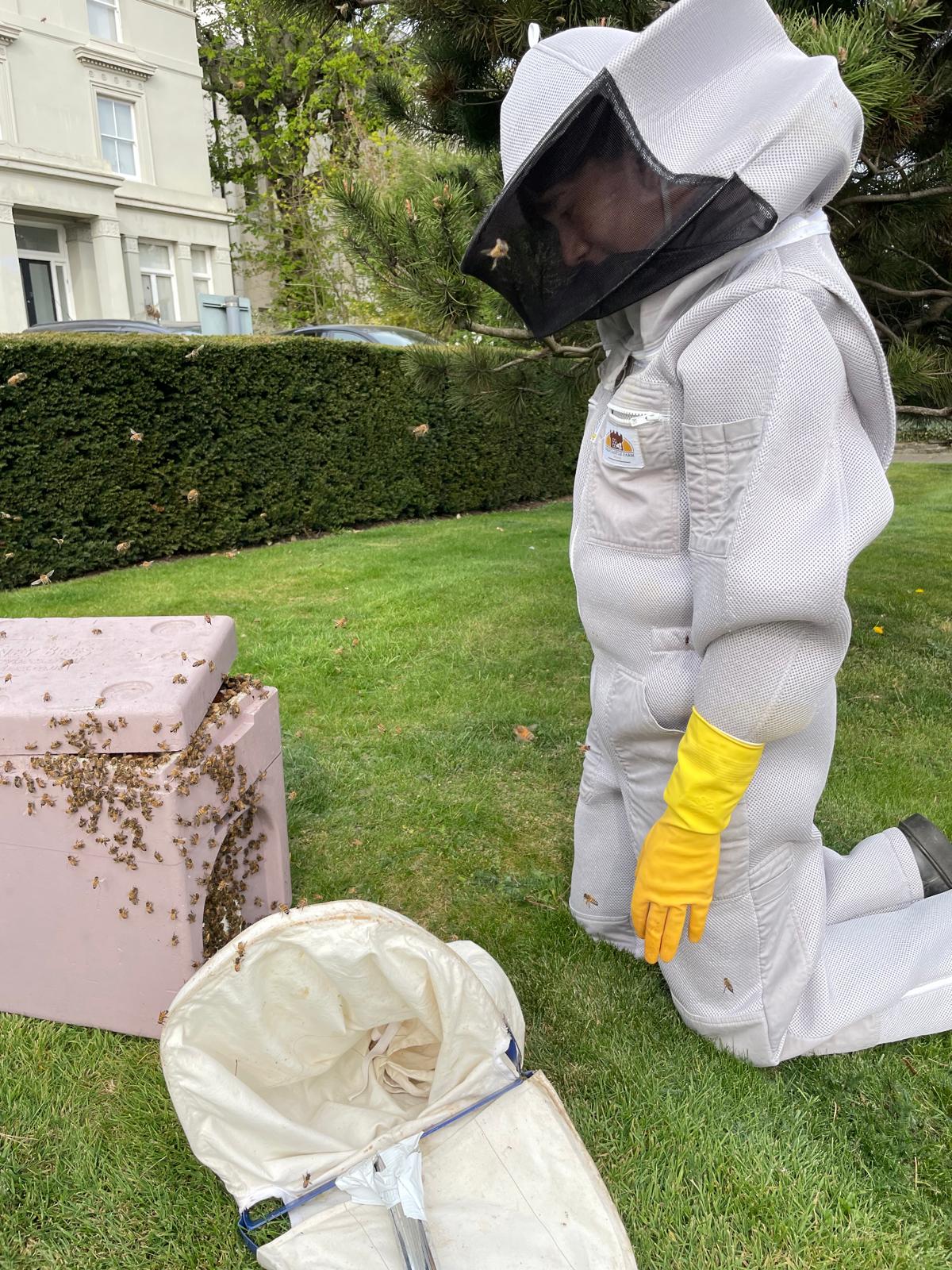
Once they leave the hive, the bees gather nearby – often in a tree, fence post, or bush – forming a tight ball-shaped cluster around the queen. They may stay in this temporary spot for a few hours or even a couple of days while scout bees search for a new home.

Are Honeybee Swarms Dangerous?

Not usually. Swarming bees are generally not aggressive, because they’re not defending a hive full of brood and honey. They’re focused on protecting the queen and finding a new place to live. That said, it’s always best to keep a respectful distance.

What Happens to Swarms?

If you spot a swarm, it can often be safely collected by a local beekeeper. This is easiest when the bees are still clustered. The beekeeper can carefully transfer the swarm into a box or hive and give them a new home.

It’s a win-win: the bees are safely rehomed, and the beekeeper gains a new colony.

✅ Tip: If you’re based in North London, contact us directly for help with local swarm collection.

What to Do If You See a Honeybee Swarm

  1. Stay calm – don’t swat at the bees or disturb them.
  2. Wait until they cluster – they usually settle within 15–30 minutes.
  3. Contact a local beekeeper – who may be able to collect them safely.

You can find someone in your area via the British Beekeepers Association swarm map.

What to Expect When You Contact a Beekeeper

The beekeeper will likely ask:

  • What the bees look like (to confirm they’re honeybees, not wasps or bumblebees)
  • Where they are (to assess whether collection is possible)
  • For photos – these really help us plan

If it’s a safe and accessible location, the beekeeper will arrange a time to come and collect the swarm. Please be patient – especially during peak season, we can get multiple calls a day!

Final Thoughts

Swarming is a natural part of the honeybee lifecycle – and a sign of a healthy colony. While it can look dramatic, it’s usually harmless and manageable with the help of a beekeeper.

If you live in London and need advice or help with a honeybee swarm, get in touch with us here. We’re always happy to help.

Sponsor a Hive and Make a Difference

At Highgate Honey, we’re excited to offer hive sponsorships for schools and businesses. Sponsoring a hive is a unique way to support bees, promote sustainability, and create a meaningful connection with nature. Whether you’re a school looking to inspire children or a company seeking a green initiative, sponsoring a hive offers an incredible opportunity to make an impact.

Why Sponsor a Hive?

By choosing hive sponsorship, you:

  • Support Vital Pollinators: Bees are essential for biodiversity and food production, and your sponsorship helps them thrive.
  • Encourage Sustainability: Your hive sponsorship promotes environmental responsibility in your local area.
  • Enjoy Local Honey: Receive jars of high-quality honey from your sponsored hive, connecting you directly to the bees you’re supporting.
  • Create Lasting Memories: For schools, this is a hands-on way to teach children about the importance of bees and pollination.

What’s Included in Your Hive Sponsorship?

When you sponsor a hive with Highgate Honey, you’ll receive:

  • Your Name on the Hive: A custom plaque with your school or business name proudly displayed on your sponsored hive.
  • Seasonal Hive Updates: Stay connected with regular updates about what your hive is up to throughout the year.
  • Jars of Honey: Enjoy honey produced by your hive, a sweet reward for your support.
  • Special Perks for Schools in North London:
    • A visit from our beekeeper to give an engaging talk to students about bees and their importance to the planet.

Why Hive Sponsorship is Perfect for Schools and Businesses

For Schools: Hive sponsorship is an amazing way to engage children with the environment and sustainability. Hands-on activities like honey tasting and learning about bees spark curiosity and foster an appreciation for nature.

For Companies: Sponsoring a hive demonstrates your commitment to sustainability and environmental stewardship. It’s a unique initiative that resonates with eco-conscious customers and employees, setting your business apart.


Ready to Sponsor a Hive?

Hive sponsorship is more than just supporting bees; it’s about creating a positive impact on the environment and building meaningful connections with nature. Whether you’re a school or a business, your support will make a difference for local pollinators and the community.

Contact us today at sponsorship@highgatehoney.com to learn more about hive sponsorship and how you can sponsor a hive with Highgate Honey. Together, we can help protect the bees that keep our world buzzing!

Sweeten Your Special Day with Mini Honey Jars as Wedding Favours

The special gift that is perfect for your wedding

WhatsApp Image 2025-01-17 at 12.32.19 (1)

When it comes to choosing the perfect wedding favour, you want something that’s meaningful, practical, and memorable. That’s where our mini jars of honey come in! These adorable little jars are more than just a sweet treat—they’re a symbol of love, warmth, and the joy of your special day. Here’s why honey is the ultimate wedding favour:

A Symbol of Love and Sweetness

Honey has long been associated with love and sweetness, making it a perfect representation of your new life together. Gifting your guests a jar of precious honey is a heartfelt way to share a little piece of your happiness with them.

Natural Elegance for Any Theme

Our mini honey jars are as versatile as they are beautiful. With their natural golden hue and customizable labels, they can complement any wedding theme—from rustic barn celebrations to elegant city soirées. Add a touch of ribbon, or a personalized label to make them uniquely yours.

A Gift with a Story

All our honey is produced by our bees in North London, offering a taste of nature’s finest. By sharing our honey with your guests, you’re not just giving them a gift; you’re sharing a story of care, sustainability, and local craftsmanship.

Practical and Memorable

Your guests will love receiving a favour they can actually use and enjoy. Whether they drizzle it over their morning toast, stir it into a cup of tea, or pair it with cheese, your mini honey jars will bring a smile to their faces long after the wedding day.

Eco-Friendly and Thoughtful

In a world where sustainability matters, honey jars are a great eco-friendly choice. The jars are reusable and recyclable, and the honey itself is a completely natural product. Pair this with eco-conscious packaging, and you’ve got a favour that’s as kind to the planet as it is beautiful.

Timeless Tradition

Did you know that the word “honeymoon” comes from an ancient tradition of drinking mead, a honey-based beverage, to celebrate a new marriage? By gifting honey, you’re continuing a time-honoured tradition with a modern twist.

Customizable and Versatile

Make your honey favours truly personal with custom labels featuring your names, wedding date, or a sweet message like:

  • “Spread the Love”
  • “Meant to Bee”
  • “Love is Sweet”
WhatsApp Image 2025-01-17 at 12.30.53 (3)

Order Your Wedding Favours Today

Let us help make your wedding unforgettable. Our mini jars of Highgate Honey are available in beautifully crafted packaging, ready to sweeten your special day. Contact us today to place your order or discuss how we can customize your honey jars to match your wedding theme. Email at contactus@highgatehoney.com. Prices start from £4.20 a jar with minimum order number.

Because love, like honey, is meant to be shared.

WhatsApp Image 2025-01-17 at 12.32.18

Becoming a Honey Sensory Expert: My Journey Through the Final Exam

This week has been nothing short of gruelling. I’ve just completed the three-day exam—the ultimate step to becoming eligible for the Italian National Register of Experts in the Sensory Analysis of Honey. This intense experience marked the culmination of a six-year journey inspired by my passion for honey and the fascinating world of sensory analysis.


The Start of My Journey

My love for honey began with my bees, who produce incredible varieties of honey across different seasons and locations. Around six years ago, I stumbled upon a newspaper article about Italy’s prestigious system for training honey experts. The idea of learning to recognize monofloral honeys through taste and smell captivated me. From that moment, I knew I wanted to pursue this path.

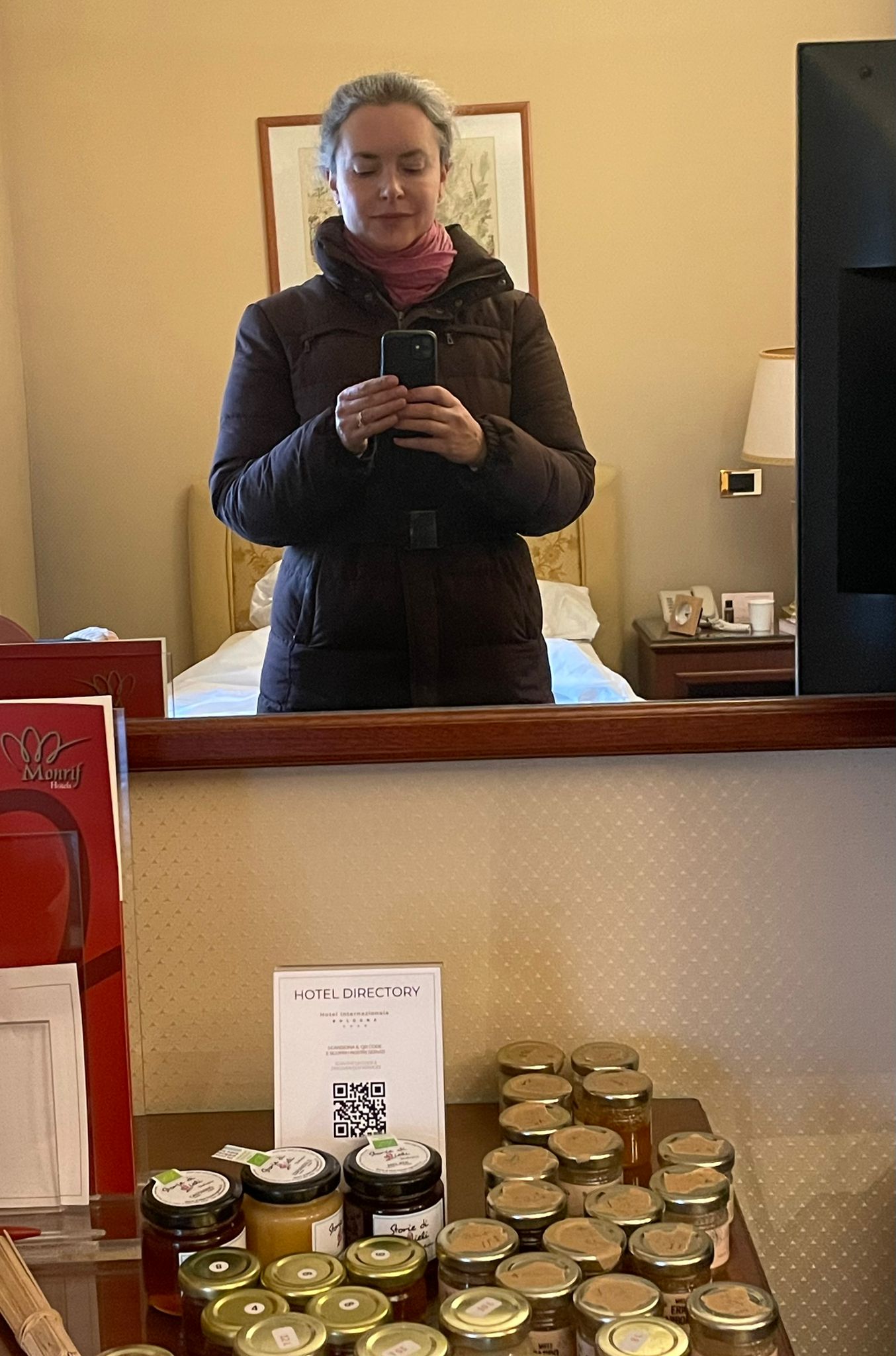
In 2019, I took my first step by enrolling in the Level 1 course in Bologna. This immersive experience introduced me to the vibrant world of monofloral honeys. The sheer variety of flavours and aromas left me awestruck. What I hadn’t anticipated was how physically and mentally draining it would be to engage my senses so intensely! Alongside sensory training, we delved into honey-related laws and beekeeping theory, laying a solid foundation for advanced study.


Advancing Through the Levels

After a pandemic-induced hiatus, I returned for Level 2 in 2023. This course expanded on Level 1, with deeper dives into honey analysis and identifying faults in honey. The process was both challenging and rewarding, sharpening my skills and fueling my determination to take on Level 3.


Preparing for the Final Exam

This year, I applied for Level 3, a rigorous three-day exam designed to test every aspect of honey sensory analysis and theory. I had been warned that it was incredibly demanding, with a pass mark of 70% and strict minimum requirements across multiple categories.

Preparation consumed months of my life. I met regularly with fellow candidates on Zoom to discuss and taste honeys together. In the weeks leading up to the exam, I intensified my practice, tasting samples daily. My family even blindfolded me during practice sessions to ensure I couldn’t peek at labels—a strategy that made the experience both challenging and fun.


The Exam: An Intense Experience

When exam day arrived, nerves hit me hard. Nothing in my life had prepared me for the intensity of this challenge. Candidates from across the globe had gathered, many travelling long distances and investing significantly to take part. The pressure was immense. Over three days, we tasted and analyzed hundreds of honey samples, pushing our senses and focus to their limits.

By the end of each session, exhaustion was palpable. Yet, the camaraderie among participants was heartwarming. Many of us had formed close friendships through shared passion and effort, which made the experience even more memorable.

Off to day 1 of the exam.


Results and Reflections

The wait for results was nerve-wracking. I knew I had given it my all, but the outcome hinged on my performance in the final category. When I learned I had passed, I was overwhelmed with joy. Calling my family to share the news was a highlight—they had supported me every step of the way, from preparing practice samples to managing things at home during my absence.

While I celebrated, it was bittersweet to see some friends not pass despite their hard work. Their determination and passion remain inspiring, and I hope to see them succeed in the future.


What’s Next?

Now that I’ve passed, I’m eligible to apply to join The Italian National Register of Experts in the Sensory Analysis of Honey. Once accepted, I’ll be one of only a handful of people in the UK on this prestigious register. This achievement marks not just a personal milestone but also an opportunity to further promote honey sensory analysis in the UK.

Throughout this journey, I’ve met incredible honey enthusiasts from around the world, forged lifelong friendships, and deepened my love for this natural wonder. I can’t wait to see where this path takes me next.


Some relevant links

Join me for a honey-tasting workshop

Level 1 course in Edinburgh 2025

Honey Guild of the United Kingdom

The Buzz on Honey Fraud: Protecting Authentic Honey in the UK

Honey has been a treasured natural sweetener for millennia. Honey fraud has been an issue for most of that time, but in recent years, honey fraud has become a major concern in the UK and worldwide. As the demand for honey rises, so do deceptive practices that threaten both consumers and ethical beekeepers. Honey fraud refers to the misrepresentation of honey through adulteration, mislabeling, and substitution. This post dives into how honey fraud occurs, why it matters, and how you can protect yourself while supporting local, genuine honey producers.

What Is Honey Fraud?


Honey fraud involves any process that compromises the purity, quality, or origin of honey to mislead consumers and boost profits. Common forms of honey fraud include:

  • Adulteration: Mixing real honey with cheap syrups (like rice, corn, or beet syrup) to reduce costs. These syrups mimic the appearance and taste of honey, but they lack honey’s nutritional benefits.
  • Mislabelling: Marketing honey as being from a certain country, region, or floral source when it isn’t. “Country of origin” fraud is particularly problematic, as it can lead consumers to think they’re buying British honey when it may actually come from overseas.
  • Substitution: Selling honey-flavoured syrup as honey or blending low-quality honey with high-quality honey to increase the volume.

Why Honey Fraud Is a Problem

  1. Impact on Consumers: Fake or adulterated honey lacks the health benefits and quality of pure honey. People consuming these products miss out on the natural antioxidants, enzymes, and trace vitamins and minerals that come in genuine honey.
  2. Harm to Ethical Beekeepers: Honey fraud undermines hardworking beekeepers who dedicate themselves to producing pure, natural honey. For UK beekeepers, honey fraud often means unfair competition with low-priced, imported honey that may not meet the same standards.
  3. Environmental Concerns: Supporting local honey supports biodiversity, as beekeepers play a vital role in maintaining bee populations. When people unknowingly buy fraudulent honey, it takes support away from ethical, eco-friendly beekeepers and their bees.
  4. Threat to Honey’s Cultural Value: High-quality honey varieties, like the UK’s renowned borage or heather honey, have distinct flavours, nutritional qualities, and seasonal ties. Honey fraud threatens these unique honeys’ integrity and the traditions surrounding them.

How to Identify Authentic Honey


While it can be challenging to tell real honey from fake, there are a few ways consumers can improve their chances of buying genuine honey:

  • Check for Traceable Labels: Look for local honey with clear labeling, such as the name of the beekeeper, apiary location, or batch numbers.
  • Support Local Beekeepers: Buying directly from beekeepers is one of the best ways to ensure authenticity. Farmers’ markets, local shops, or online stores run by beekeepers themselves are good options.
  • Learn about Honey Sensory Analysis: Honey tasting, a skill that trained experts use to detect flavour notes, can be an indicator of quality. In the UK, the Honey Guild has started sensory analysis training to support and protect UK honey producers. Learning the nuances of flavour and texture can help you appreciate the unique qualities of authentic honey.

A recent Guardian article and investigations by the CleanUpTheHoneyMarket project have highlighted issues with honey authenticity in the UK. Honey fraud is a growing problem.

The Guardian reported that tests revealed alarming results: every sample of imported honey in the UK that was tested, failed authenticity standards. This suggests the widespread presence of adulterated or mislabeled honey in UK shops. This issue goes beyond individual brands, raising questions about the regulation of imported honey in the UK.

The YouTube channel CleanUpTheHoneyMarket has released a film that dives deeper into this fraud, exposing how certain brands exploit the lack of rigorous testing to sell honey that isn’t pure. Even more alarming was that the fraudsters have a special “UK grade” of “honey” that is lower than the rest of Europe because the testing of honey imported to the UK isn’t as rigorous as other countries.

If you’d like to get hold of some genuine honey, then take a look in our shop!

Introducing the Honey Guild of the United Kingdom

This year marks an exciting milestone for British beekeepers with the founding of the Honey Guild of the United Kingdom. As one of the founders, I’m thrilled to share a bit about our journey and what we’re striving to achieve. Our mission is clear: to champion high-quality honey from around the UK.

We launched the Guild this week with our first stand at the National Honey Show. We introduced ourselves to a community of fellow beekeepers and honey enthusiasts who share our passion for exceptional honey. This annual event brought together beekeepers and honey lovers from all over the country. It was the perfect venue to connect, exchange ideas, and introduce our initiative.

What Sets the Honey Guild Apart?

All of our founders have trained in Honey Sensory Analysis in Italy. We learned from experts in the Italian methods to identify and appreciate the diverse profiles of honey. We now apply these skills to analyze the unique kinds of honey in the UK, providing a deeper understanding of each honey’s flavour, aroma, and origin.

Our members are passionate learners, dedicated to exploring the characteristics that make each honey distinct. From rural fields of borage to heather moors to urban apiaries, each honey we study tells a story rooted in respect for bees, biodiversity, and the British landscapes from which they gather nectar.

Our Mission and Vision

The Guild was born out of a desire to raise the profile of UK honey and ensure that consumers have access to truly authentic products. With the rise of adulterated and imported honey, it’s more important than ever to support and recognize beekeepers dedicated to the highest standards of honey production. Through educational events, workshops, and tastings, we aim to build an informed community that understands the unique qualities of genuine British honey.

Looking Ahead

Our stall at the National Honey Show was just the beginning. We’re planning events, tastings, and certifications to help people explore the diverse flavours of real British honey, backed by the precision and care of trained Honey Sensory Analysts.

For those interested in learning more or joining the Guild, please look at our website and follow the Honey Guild UK on social media. Whether you’re a beekeeper or a honey lover, we welcome you to connect with us as we embark on this journey to celebrate and protect British honey and the bees that make it possible.

We are running some in-person and online honey tasting workshops over the next few months – booking is in our shop.